
AI agents are software systems that perform tasks autonomously, making decisions based on goals defined by humans. They function as intelligent digital assistants capable of planning, executing, and improving processes in real time, using internal and external data and continuous learning.
Beyond answering basic questions, agents combine natural language processing, machine learning, and access to enterprise tools, enabling them to coordinate complex tasks and collaborate with other systems or agents. For example, a virtual assistant can consult your ERP, analyze order history, and automatically manage delivery incidents, saving time and improving customer satisfaction.
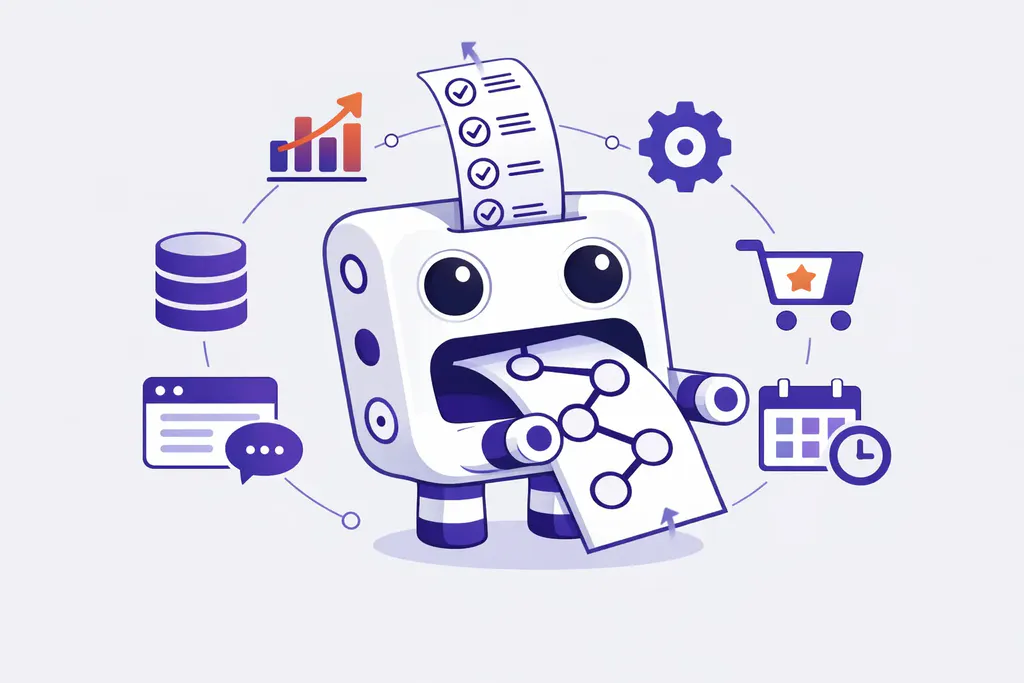
How AI agents work
An AI agent operates following a simple yet powerful cycle:
- Clear objectives: humans define measurable goals aligned with the business strategy.
- Information gathering: accesses internal data (ERP, CRM, databases) and external data (public information, sensors, APIs).
- Planning and action: decides the steps needed to achieve its objective, executing autonomous tasks and monitoring results.
- Learning and continuous improvement: adjusts its behavior based on results, experience, and human feedback, increasing effectiveness over time.
These cycles allow agents to manage repetitive internal processes, automated content generation, web testing, e-commerce personalization, intelligent chatbots, and data analysis, among others.
Types of AI agents and practical examples
- Conversational agents: chatbots and virtual assistants that serve customers or employees.
- Functional agents: support specific functions such as human resources, accounting, or technical support.
- Utility agents: execute specific tasks such as database queries, meeting scheduling, or report generation.
- Learning agents: improve their results over time, optimizing recommendations and repetitive processes.
Real-world examples:
- An e-commerce agent that provides personalized recommendations based on user purchasing behavior.
- A customer support agent that resolves incidents by consulting databases, ERP systems, and real-time tracking tools.
- An administrative agent that automates invoicing and controls cash flow.
Key benefits of AI agents
- 24/7 availability: they operate continuously, without breaks, vacations, or absences.
- Greater accuracy and consistency: reduce human errors and apply processes uniformly.
- Efficiency and cost savings: free staff from repetitive tasks and optimize resources.
- Scalability: increase operational capacity without the need to multiply staff.
- Data-driven decisions: analyze information from internal and external systems to generate reliable outcomes.
- Personalized experiences: tailor recommendations, content, and services to each user, increasing engagement and conversions.
Best practices for implementing AI agents
- Define clear and measurable objectives: avoid vague or ambiguous goals.
- Gradual supervision: monitor initially and increase autonomy once success is proven.
- Documentation and KPIs: record processes, decisions, and results to evaluate performance.
- Security and privacy: control access to sensitive data and protect company information.
- Continuous learning: adjust the agent based on human feedback and new data to optimize performance.
- Integration with existing systems: connect with CRM, ERP, dashboards, marketing tools, and internal workflows.
Why AI agents are key for your company
AI agents transform the way companies work, automating repetitive tasks, optimizing processes, and improving the experience of customers and employees. They also enable the safe, scalable, and business-aligned application of artificial intelligence, ensuring technology is used strategically and effectively.
At Omitsis, we implement AI agents tailored to your needs, from internal process automation, SEO-optimized content generation, e-commerce personalization, to predictive analytics and intelligent dashboards, ensuring robust and scalable solutions.