
- What an AI Architect really is
- An AI Architect is, above all, a software architect
- The problem of lacking a technical foundation
- AI requires more experience, not less
- Conclusion
Artificial Intelligence has transformed software development. Today it is possible to generate code, automate processes, and even build complete applications with the help of advanced models. In this context, a new professional role has emerged: the AI Architect.
But along with this growing demand, a worrying phenomenon has also appeared: profiles that call themselves AI Architects or livecoders without having the necessary technical foundation.
Understanding what this role really is is key to not confusing the use of AI tools with AI-based system architecture.
For an AI to accurately achieve its objective, planning the architecture is essential.
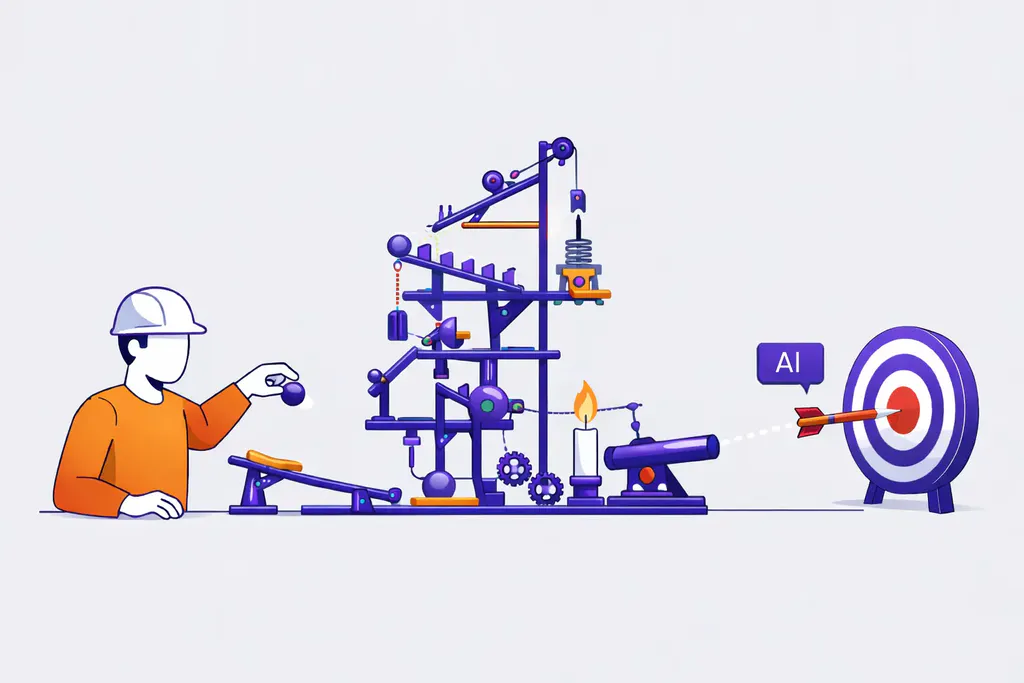
What an AI Architect really is
An AI Architect is the professional responsible for designing how artificial intelligence is integrated into a software system architecture.
They are not limited to using AI to generate code. Their role is structural and strategic. Their responsibilities include:
- Designing how AI interacts with the system architecture.
- Defining models, processes, prompts, data flows, and security rules.
- Ensuring that generated code meets technical specifications.
- Ensuring software security, consistency, scalability, and maintainability.
- Coordinating work between automation and human supervision.
In other words, the AI Architect turns AI’s power into real, functional, and sustainable production software.
An AI Architect is, above all, a software architect
AI does not eliminate system architecture: it makes it more critical.
Designing complex systems requires deep understanding of:
- Software architecture and complex web systems
- Service and platform integration
- Application security and risk control
- System scalability and performance
- Long-term software maintainability and evolution
That is why the natural profile of an AI Architect is usually a senior developer with solid architectural experience who learns to integrate AI into existing or new systems.
They can learn AI relatively quickly because they already understand how systems work.
The problem of lacking a technical foundation
The accessibility of AI tools has created a dangerous perception: that using AI is the same as knowing how to design systems with AI.
This is not true.
More and more profiles are appearing who, after short training or limited experience with generative tools, present themselves as AI Architects. However:
- Knowing how to generate code is not designing architecture.
- Knowing how to write prompts is not understanding complex systems.
- Automating tasks is not building robust software.
When technical foundations are missing, AI does not improve the system: it accelerates design errors, poor decisions, and structural vulnerabilities.
The result is usually software that appears functional… but is fragile, inconsistent, or impossible to maintain.
AI requires more experience, not less
The more powerful the AI, the greater the technical judgment required to govern it.
A system that integrates AI needs:
- solid architectural decisions
- expert technical validation
- deep understanding of the project domain
Without this, automation only multiplies problems at greater speed.
AI does not replace architectural experience.
It amplifies it… or exposes its absence.
Conclusion
An AI Architect is not someone who knows how to use artificial intelligence tools.
It is a software architect capable of designing systems where AI operates in a controlled, secure manner aligned with real business objectives.
That is why not everyone can be an AI Architect.
And pretending to be one without a solid foundation in development and architecture is not just a professional mistake… it is a technical risk for any serious project. Discover how Omitsis can help you implement this strategy and transform your software development with AI through AI solutions.